
7 Subtle Signs Of Water Damage You Should Never Ignore
Small water leaks can lead to significant water damage and costly issues with flooring over time. Water seeps under flooring and subflooring due to leaking pipes, appliances, roofs, or fixtures. The repercussions of a small leak can be costly repairs and the eventual need to replace flooring.
Early signs of water damaged floors can help many Katy, TX area homeowners avoid a larger issue.
How Do Water Leaks Damage Floors?
Different types of flooring will show signs of water damage in different ways. Some flooring absorbs water, leading to warped or discolored boards, while other floors let water pass through, creating a pathway to the subfloor.
Water damage can cause an assortment of problems, such as:
- Warped or buckled flooring
- Swollen boards or edges
- Dark stains and discoloration
- Loose or separating planks
- Soft, spongy flooring
- Musty odors
- Damaged subfloors
- Concerns with mold of mildew
Once water has seeped under flooring, the longer it is allowed to remain, the worse the damage will become.
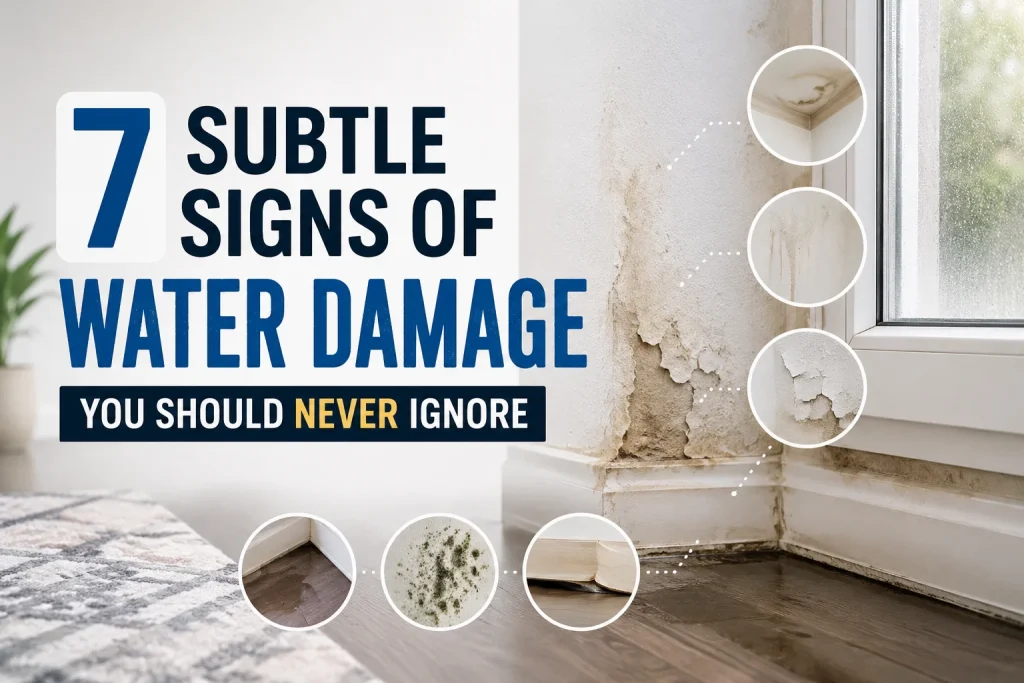
7 Signs of Water Damaged Floors
Warped or Buckled Flooring
Floor water damage causes wood flooring to cup or warp, unevenness in laminate flooring, and other types of flooding to lift from the surface below causing a buckling effect.
If you ever notice edges or sections of your flooring that have become raised or uneven, this might mean that moisture has penetrated the flooring below.
Dark Stains or Discoloration
Another sign of moisture damage to your floor can be dark or brown stains, water rings, or yellow discolorations. Uneven patches of discolorations often appear as well. Keep in mind that visible signs of damage to your flooring may not necessarily show the full extent of damage because moisture easily spreads under and beyond visible areas of damage.
Swollen or Separating Flooring
Some materials that make up flooring tend to absorb moisture and expand to the point where spaces between the flooring begin to show. Swollen edges, gaps, lifted or torn seams, and uneven surface transitions are signs that moisture damage to your flooring has occurred. Laminate and wood flooring tend to be damaged more easily by moisture that has caused swelling. Moisture damage should never be ignored, even if it is simply covered up with a new piece of flooring.
Soft or Spongy Spots
Flooring that has become soft feels the same as the flooring that has become spongy. This usually means moisture has begun to affect the flooring and the adhesive underneath. The same is true for the subfloor.
Musty or Unusual Odors
Musty smells that are persistent are signs that moisture has become trapped below or around your flooring.
Even though visible water may no longer exist, moisture trapped beneath the flooring or in the subfloor can still exist. Stains, swelling, changes to the floor, and odors warrant further inspection.
Peeling, Cracking, or Lifting
Weakened flooring adhesives and moisture penetrating the interface between the flooring and the substrate can cause water to weaken and diminish the adhesion of flooring.
You may see:
- edges of flooring starting to peel
- flooring that is lifting
- loose sections
- fractured surfaces
- misaligned seams
- deterioration of transitions
Damage will continue to progress through the flooring as moisture persists
Damage That Keeps Coming Back
The most important damage indicator can sometimes be a damage indicator that won’t seem to go away. Water, moisture, or excessive humidity that is trapped can be the reason that stains and damage from swelling, odors, and soft spots continue to return after you clean and dry the area.
This can be an indication that water is still coming into contact with your flooring, or that moisture is being trapped under your flooring.
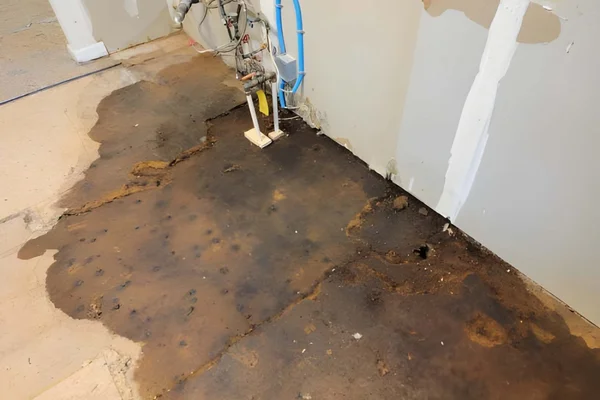
What Happens When Water Gets Under Flooring?
Moisture that has worked its way under the flooring may not be readily apparent. Water can seep through seams and reach the subfloor from the surface of the floor. This can lead to long-term deterioration of the material causing unpleasant odors and issues.
Water damage floor repair may seem like it is completed when the water on the surface is removed, but the moisture trapped under the flooring can lead to further issues.
The solution depends on the factors below:
- The type of flooring
- The amount of water
- The exposure time of flooring
- Location of leak
- The subfloor condition
- The extent of damage
Can Water – Damaged Floors Be Repaired?
Has the flooring become swollen, warped, and stretched due to moisture? In some cases, water-damaged floors can be repaired.
The Repair Vs. Replacement Dilemma
The solution depends on the extent of damage. For minor damage, a repair can be done. However, for more serious damage involving a lot of swelling, warping and extensive moisture exposure, replacement is the only viable option.
A professional flooring contractor can evaluate the damage and determine if repair or replacement is the better option.
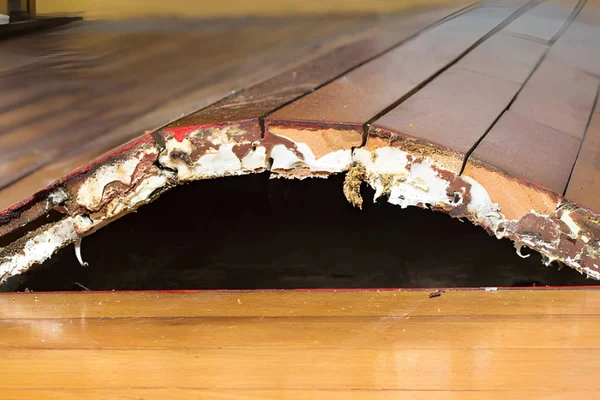
What Should You Do After You Spot Water Damage On Your Floor?
Water damage needs to be addressed as quickly as possible in order to minimize the damage further. Here are some tips on what you should do after you spot water damage on your floor.
- Replace the water source.
If it is safe to do so, turn off the water source at the leak. - Scoop up the water.
Immediately remove standing water to limit exposure. - Take photos.
Take photos of the water damage for your records, as this will help when you present your issue to a professional. - Watch for signs of damage.
Keep an eye out for flooring that has begun to separate, warp, buckle, show stains, or have a foul odor as these are signs of damage. - Contact a professional.
If you are not sure where the source of damage is or how much it has spread, contact a professional.
Flooring that has become water damaged should be addressed before it becomes a bigger issue. Warped, buckling flooring is a clear sign of damage that needs to be addressed.
Floors also start to become soft, unstable, and have a musty or foul odor. These are telltale signs of water damage that needs to be addressed by a professional. Damage that expands to affect multiple areas of the room is also a red flag that repairs may be needed.
If you notice any of these signs of floor damage, contact Flooring Contractor Katy TX for professional help before the problem gets worse.
Water Damage Floor Repair in Katy, TX
Water leaks can happen unexpectedly, from plumbing problems and leaking appliances to burst pipes and other household issues. When water reaches your flooring, acting quickly can make a significant difference.
If you’re dealing with water damaged flooring in Katy, TX, a professional flooring contractor can evaluate the affected area and help determine whether repair or replacement is appropriate.
Don’t ignore flooring that suddenly becomes warped, swollen, stained, soft, or uneven after a water leak. These changes may be signs of water damage to floors, and addressing the problem early can help protect your home and your flooring investment.
Need help with damaged flooring in Katy, TX? Contact Flooring Contractor Katy today to discuss your floor repair or replacement options.
Frequently Asked Questions
Common signs of water damage to floors include warping, buckling, swelling, dark stains, soft or spongy areas, separating planks, peeling surfaces, and persistent musty odors. If these signs appear after a leak or water spill, the flooring should be evaluated.
Yes, some water damaged floors can be repaired depending on the type and extent of the damage. Minor damage may be repairable, while severely warped, swollen, or deteriorated flooring may need to be replaced.
Water underneath flooring can reach the subfloor and cause swelling, warping, odors, deterioration, and other moisture-related problems. Hidden moisture can also make the damage more difficult to identify without a proper inspection.
Yes. Water damage to wood floors can cause hardwood planks to swell, warp, cup, crown, stain, or separate. The severity depends on how much water reached the flooring and how long the wood remained exposed to moisture.
Flooring can begin showing effects from moisture relatively quickly, but the severity varies depending on the flooring material, amount of water, ventilation, and how long the moisture remains present. Addressing leaks and standing water promptly can help limit further damage.