Best Carpet for Pets: Durable & Stain-Resistant Flooring Options
Pets make a house feel like home, but they can also be tough on flooring. Muddy paws, shedding hair, sharp claws, spills, and occasional accidents can quickly take their toll on the wrong type of carpet.
Fortunately, having a dog or cat doesn’t mean you have to give up the warmth and comfort of the carpet. Choosing the right carpet for pets can give you a soft, comfortable floor while making everyday cleaning and maintenance much easier.
In this guide, we’ll explain what makes a carpet pet-friendly, compare the best carpet fibers, and show you what features to consider before choosing new flooring.
What Makes a Good Carpet for Pets?
Not every carpet is designed to handle life with animals. A carpet may look beautiful in a showroom but become difficult to maintain once it is exposed to pet hair, claws, dirt, and accidents.
According to the Carpet and Rug Institute, stain resistance and durability are two of the most important considerations when selecting carpet for a household with pets.
A good pet-friendly carpet should ideally offer:
- Strong stain resistance
- Good resistance to everyday wear
- Easy removal of pet hair
- Low or tightly constructed pile
- Resistance to claw-related damage
- Easy spot cleaning
- Colors or patterns that disguise minor dirt and hair
- Quality backing or moisture protection
The goal isn’t simply to find the toughest carpet available. You want a balance between durability, comfort, appearance, and maintenance.
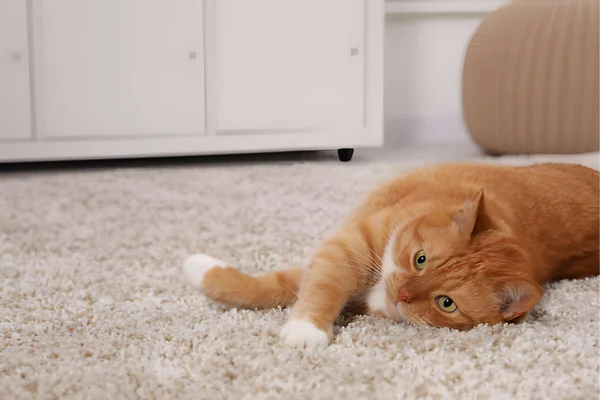
Best Carpet Materials for Pets
The carpet fiber has a significant influence on how the flooring responds to stains, traffic, and everyday wear.
Here are some of the most practical options.
1. Nylon Carpet
Nylon is one of the strongest choices for busy households with pets.
Its main advantage is resilience. It can withstand significant foot traffic and tends to maintain its appearance well, making it particularly useful in living rooms, hallways, family rooms, and other areas where both people and pets are constantly moving.
Nylon itself isn’t naturally as stain-resistant as some competing fibers, so many nylon carpets are manufactured with additional stain-resistant treatments.
Best for: Active dogs, multiple-pet households, and high-traffic rooms.
Advantages:
- Excellent durability
- Good resilience
- Suitable for high-traffic areas
- Available in many styles
- Many products include stain-resistant treatments
The potential disadvantage is cost. Premium nylon carpet can be more expensive than polyester alternatives, but its durability can make the additional investment worthwhile for demanding households.
2. Polyester Carpet
Polyester is another popular carpet for pets, particularly for homeowners who prioritize stain resistance, softness, and affordability.
PET polyester is naturally stain resistant and also provides good resistance to fading.
Polyester carpets can therefore work particularly well in bedrooms and moderate-traffic living spaces.
However, conventional polyester generally doesn’t have the same level of resilience as high-quality nylon. In extremely busy areas, it may show wear sooner.
Best for: Pet owners looking for stain resistance and comfort at a more accessible price.
Advantages:
- Naturally stain resistant
- Soft underfoot
- Good color clarity
- Fade resistant
- Often more affordable than premium nylon
For households with relatively calm pets or moderate traffic, a high-quality polyester carpet can offer excellent value.
3. Triexta Carpet
Triexta has become another notable option for pet-friendly homes.
It combines softness with strong stain resistance and durability. Certain triexta carpet ranges are specifically marketed around pet stain protection, making the fiber worth considering when accidents are a major concern.
The key advantage is that stain resistance can be inherent to the fiber rather than depending entirely on a surface treatment.
Best for: Families wanting a combination of softness, durability, and stain protection.
Advantages:
- Strong stain resistance
- Soft texture
- Good durability
- Easy maintenance
- Suitable for busy households
If your priority is finding a comfortable carpet that can also cope with everyday pet-related messes, triexta deserves a place on your shortlist.
4. Olefin/Polypropylene Carpet
Polypropylene, commonly called olefin, is another synthetic carpet fiber.
It is naturally resistant to stains and fading and is generally one of the more affordable carpet materials. However, it isn’t as resilient as nylon or some high-performance polyester products.
There is another consideration for pet owners: polypropylene is frequently used in loop-pile carpet. Loops may not be ideal for animals whose claws tend to snag carpet fibers.
For that reason, construction should be considered alongside the fiber itself.
Best for: Budget-conscious households and appropriate lower-demand spaces.
Look for Stain-Resistant Carpet
Pet accidents happen, even in well-trained households.
That’s why stain resistance should be near the top of your shopping checklist.
Look for carpets that either use naturally stain-resistant fibers or incorporate stain-protection technology. Some pet-specific carpet collections also provide enhanced protection against pet-related stains and soil.
Remember that “stain resistant” doesn’t mean “stain proof.” Product warranties can have very specific exclusions, cleaning requirements, and definitions of what qualifies as a covered pet stain. Always check the manufacturer’s warranty before purchasing.
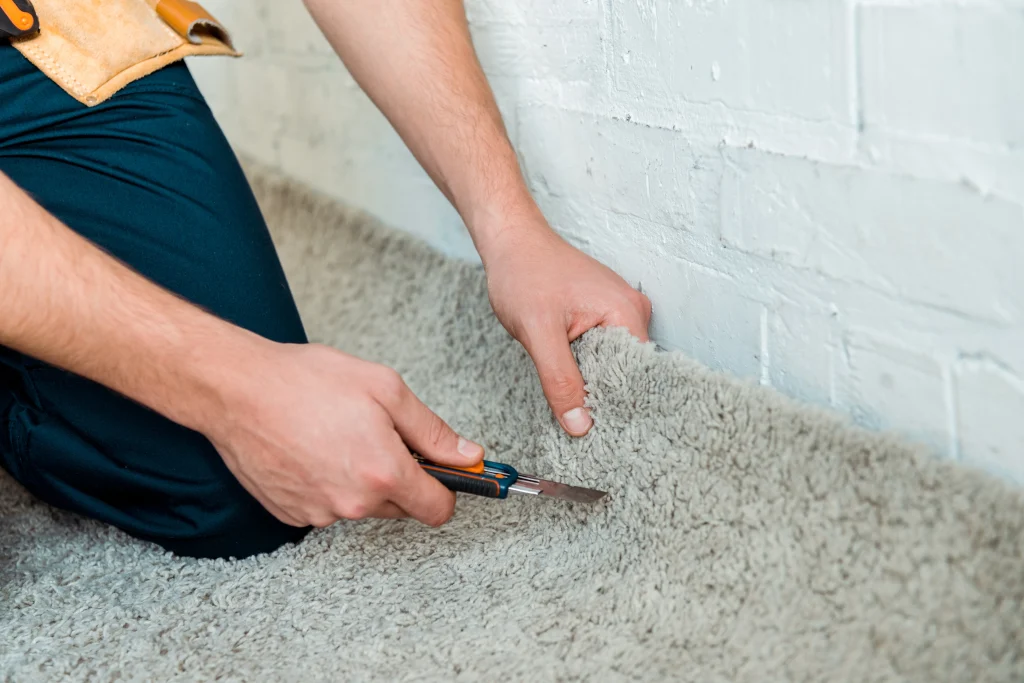
If you’re unsure which carpet is right for your home, Flooring Contractor Katy TX can help you explore durable, stain-resistant options suited to your pets and lifestyle. Our carpet installation service in Katy, TX provides professional installation to help ensure your new carpet looks great and performs well for years to come.
Consider Moisture-Resistant or Spill-Proof Backing
The carpet fiber isn’t the only layer that matters.
When a pet accident penetrates through the carpet pile, moisture may reach the backing, padding, or even the subfloor. That can make odor and stain problems much harder to address.
Some pet-oriented carpets offer enhanced or spill-resistant backing systems designed to reduce liquid penetration. For example, certain pet-specific carpet collections advertise backing designed to provide additional protection against accidental spills.
If you have a puppy, senior pet, or animal prone to accidents, backing protection can be an especially valuable feature.
Choose a Low-Pile Carpet for Easier Cleaning
Long, luxurious carpet can feel wonderful, but it isn’t necessarily the easiest flooring to maintain around pets. Pet hair, dirt, crumbs, and debris can become trapped deeper within longer fibers.
A low-pile carpet for pets is generally easier to vacuum and maintain. It also gives claws less material to catch. A textured low-pile design can provide another benefit: it may make everyday soil and debris less noticeable between cleaning sessions. Shaw Floors similarly recommends considering low-pile, textured carpet when selecting flooring for pets.
What Carpet Color Is Best for Pets?
The perfect carpet color depends partly on your pet. Very dark carpet can make light-colored fur highly visible, while very light carpet can make dark fur stand out immediately. Instead of choosing purely based on interior design trends, consider how the carpet will look between vacuuming sessions. A practical approach is to choose a shade reasonably close to your pet’s coat color.
You can also consider:
- Multi-tone carpets
- Flecked designs
- Textured patterns
- Mid-tone neutrals
- Heathered carpet
Patterns and mixed colors can disguise minor soil, pet hair, and everyday debris better than completely uniform colors. The Carpet and Rug Institute also recommends considering color and pattern strategically when selecting carpet for pet households.
Carpet Features Pet Owners Should Look For
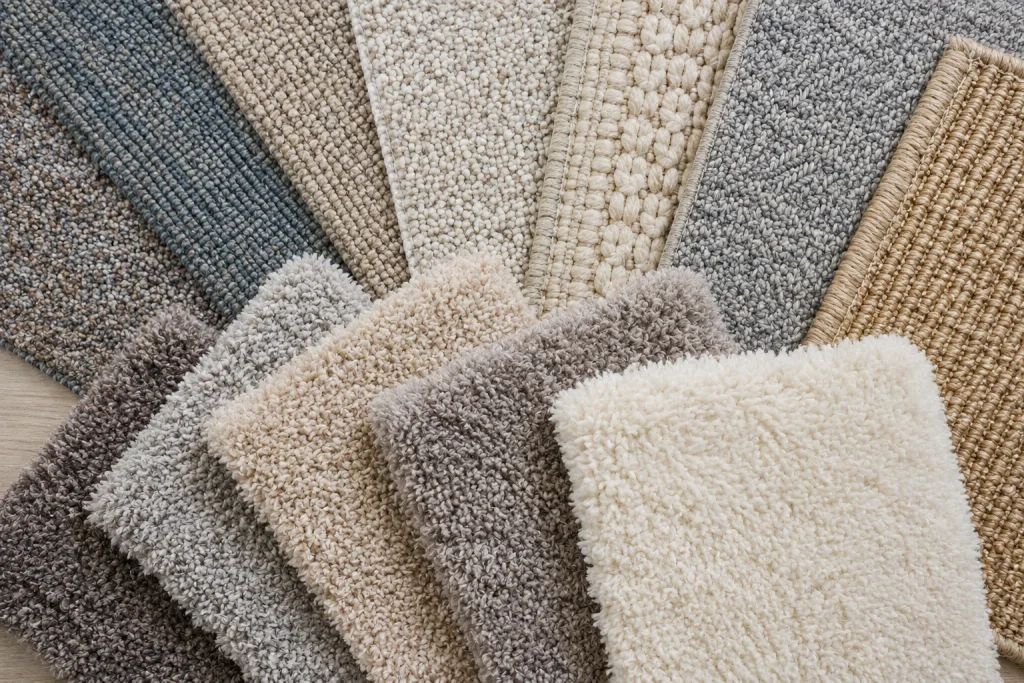
When comparing carpet samples, don’t choose based on fiber alone. Look at the complete construction and warranty.
Stain Protection
Check whether stain resistance is inherent to the fiber or provided through a treatment. Also determine whether pet urine and other pet-related accidents are specifically covered under the warranty.
Dense Construction
A dense carpet generally performs better than a loose, open construction in a busy household.
Low Pile
Shorter fibers make routine vacuuming easier and reduce places where pet hair and debris can accumulate.
Cut-Pile Construction
Cut pile reduces the risk associated with claws snagging exposed carpet loops.
Protective Backing
Moisture-resistant backing can provide an extra layer of protection when spills or accidents occur.
Pet-Specific Warranty
Some manufacturers offer carpets specifically designed for households with pets. Read the complete warranty rather than relying only on marketing claims, as coverage and exclusions vary between products.
How to Keep Carpet Clean When You Have Pets
Even the best carpet for pets needs regular maintenance. The good news is that a consistent routine can prevent everyday dirt and minor accidents from becoming bigger problems.
Vacuum Frequently
Pets constantly introduce hair, dander, soil, and outdoor debris.
Vacuuming more frequently prevents this material from accumulating deeper in the carpet. The Carpet and Rug Institute specifically recommends more frequent vacuuming for households with pets.
High-traffic areas and your pet’s favorite sleeping spots may require extra attention.
Deal With Accidents Quickly
The longer a spill or accident remains on the carpet, the greater the opportunity for it to penetrate deeper into the flooring.
Address accidents as soon as you notice them.
When treating a spot, blot rather than aggressively scrub. Scrubbing can spread the stain and potentially damage carpet fibers.
Use an Appropriate Carpet Cleaner
Always follow your carpet manufacturer’s cleaning recommendations.
Using an unsuitable chemical may damage the carpet or affect warranty coverage. When possible, choose cleaning products specifically intended for carpet and pet stains.
Deep Clean Periodically
Routine vacuuming removes loose dirt, but deeper cleaning is still important.
The Carpet and Rug Institute recommends professional carpet cleaning every 12 to 18 months, with more frequent cleaning when necessary.
Homes with multiple pets, heavy shedding, or frequent accidents may need more frequent attention.
Keep Paws Clean
A simple mat near entrances can reduce the amount of mud, moisture, and dirt pets bring into carpeted rooms.
Wiping dirty paws after walks can also significantly reduce everyday carpet maintenance.
Common Mistakes to Avoid When Choosing Carpet for Pets
One of the biggest mistakes is choosing carpet based entirely on appearance. A beautiful carpet won’t feel like a good investment if you’re constantly struggling to remove fur or worrying about claw damage.
Avoid:
- Very loose loop-pile constructions for pets prone to scratching
- Extremely long pile if easy cleaning is a priority
- Carpet without adequate stain protection
- Colors that strongly contrast with your pet’s fur
- Ignoring the carpet backing
- Buying without checking pet-stain warranty conditions
- Choosing price over long-term durability
Think about how your household actually functions before choosing a style.
A home with one small indoor cat has very different flooring requirements from a household with three large dogs regularly coming in from the backyard.
Final Thoughts: What Is the Best Carpet for Pets?
The best carpet for pets combines durability, stain resistance, easy cleaning, and pet-friendly construction.
For many households, a dense, low-pile cut carpet made from nylon, polyester, or triexta will provide the best balance. Nylon is particularly attractive when resilience and heavy traffic are priorities, while polyester and triexta are strong candidates when stain resistance is especially important.
Don’t overlook backing, construction, color, or warranty coverage. These details can have just as much impact on your experience as the carpet fiber itself.
Most importantly, choose flooring based on your actual pet and lifestyle. An active household with several large dogs needs something different from a quiet home with one indoor cat.
If you’re looking for professional carpet installation in Katy, TX, Flooring Contractor Katy can help you choose a carpet that fits your home’s needs, lifestyle, and budget. From selecting the right carpet to professional installation, our team can help you create a comfortable and pet-friendly space.
With the right carpet for pets and professional installation, you don’t have to choose between comfort and practicality. Contact Flooring Contractor Katy, TX for carpet installation and find a flooring solution designed to handle paws, fur, spills, and everyday pet life.
Frequently Asked Questions
A low-pile, dense cut carpet made from a durable synthetic fiber such as nylon, polyester, or triexta is generally a strong choice. Look for stain protection and, where accidents are a concern, enhanced backing protection.
Yes. Pets increase the likelihood of muddy footprints, spills, urine accidents, and other stains. Built-in or manufacturer-applied stain resistance can make routine cleanup easier, although you should always check exactly what the warranty covers.
Vacuuming frequency depends on the number of pets and how much they shed. Pet households generally benefit from more frequent vacuuming, while the Carpet and Rug Institute recommends professional carpet cleaning approximately every 12 to 18 months, or more frequently when needed.
A carpet close to your pet's coat color generally makes shed hair less noticeable. Flecked, textured, heathered, and multi-tone carpets can also disguise hair and minor debris better than uniform contrasting colors.