How to Take Care of Vinyl Flooring: Easy Tips
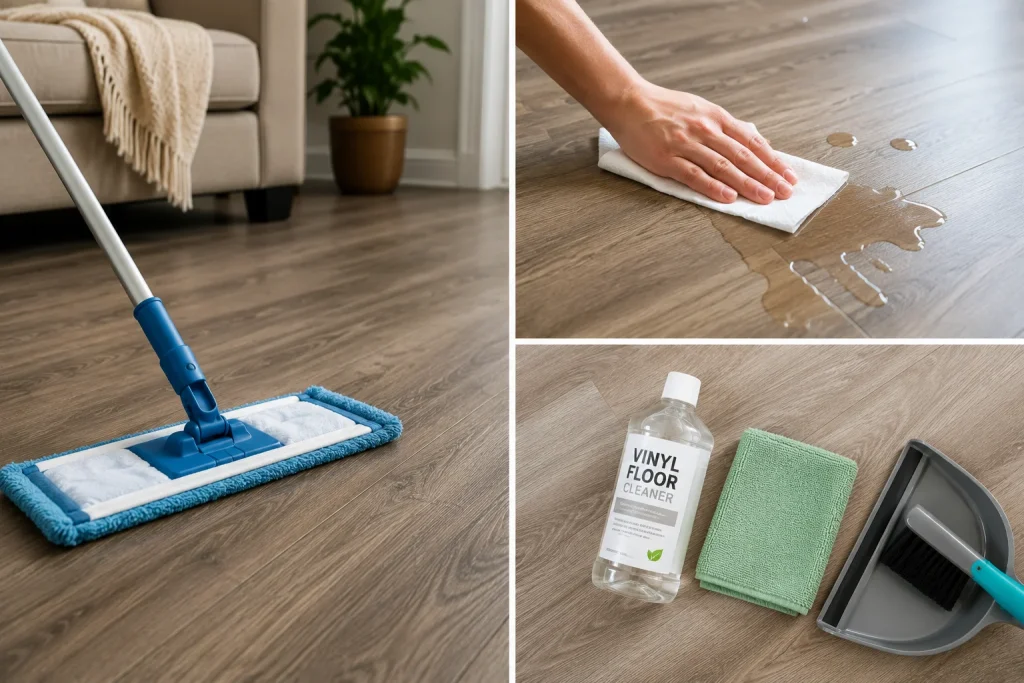
Table of Contents
Vinyl flooring is a popular choice for homeowners because it offers durability, attractive designs, and relatively easy maintenance. However, even the best vinyl flooring needs proper care to stay clean and look its best for years.
Regular cleaning, quick spill removal, and a few simple precautions can help protect your vinyl floors from scratches, stains, moisture, and everyday wear.
Whether you have luxury vinyl plank (LVP), luxury vinyl tile (LVT), or another type of vinyl flooring, these simple maintenance tips can help keep your floors in great condition.
Why Is Proper Vinyl Floor Care Important?
Although vinyl flooring is designed to handle everyday household activity, dirt and debris can gradually affect its appearance. Grit can act like sandpaper under shoes, while spills that are left unattended may leave stains or make the surface difficult to clean.
Proper vinyl floor maintenance can help:
- Keep floors looking clean and attractive
- Reduce scratches and surface wear
- Prevent dirt and debris from building up
- Make regular cleaning easier
- Protect the flooring from unnecessary damage
- Extend the useful life of your flooring
The key is to clean regularly and avoid cleaning products or methods that may damage the flooring surface.
1. Sweep or Vacuum Your Vinyl Floor Regularly
One of the easiest ways to take care of vinyl flooring is to remove dirt and debris regularly.
Dust, sand, pet hair, and small particles can accumulate on the floor throughout the day. When people walk over this debris, it can potentially scratch or wear the surface over time.
Use a soft-bristle broom, microfiber dust mop, or vacuum designed for hard flooring.
How often should you clean?
For busy homes, you may want to sweep or vacuum several times a week. Homes with pets, children, or heavy foot traffic may need more frequent cleaning.
Regular dry cleaning is much easier than waiting until dirt has accumulated across the entire floor.
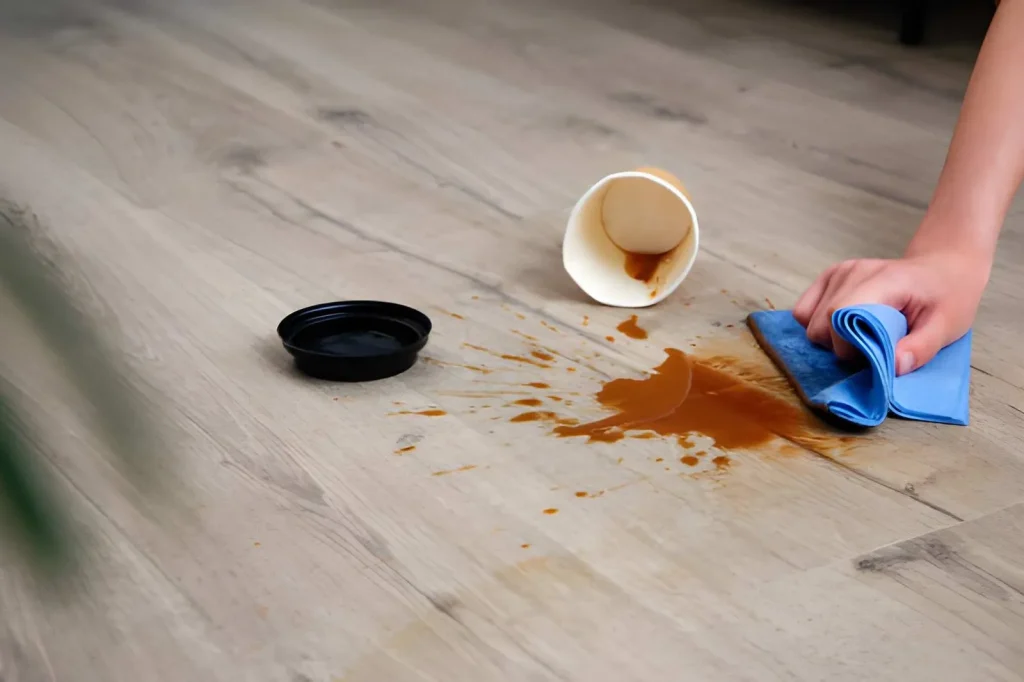
2. Clean Spills as Soon as Possible
Vinyl flooring is known for being easy to maintain, but spills should still be cleaned promptly.
Food, drinks, pet accidents, and other liquids can leave residue if they’re allowed to sit on the floor for too long.
When a spill occurs:
- Wipe it up with a clean cloth or paper towel.
- Remove any remaining residue.
- Clean the area with an appropriate vinyl-floor cleaner if necessary.
- Dry the area afterward.
Quick cleanup is particularly important in kitchens, dining areas, entryways, and homes with pets.
3. Use the Right Cleaning Solution
Choosing the right cleaner is an important part of vinyl flooring care.
Use a cleaning product that is specifically recommended for vinyl flooring or approved by your flooring manufacturer. Avoid experimenting with harsh chemicals or products that may leave a sticky residue.
When you’re unsure about a cleaning product, check the manufacturer’s care instructions before using it.
Avoid harsh cleaning products
Some strong cleaners can affect the finish or appearance of vinyl flooring. Avoid using products unless they’re specifically considered appropriate for your particular flooring.
Always follow the manufacturer’s recommendations for cleaning and maintenance.
4. Don’t Use Excessive Water
Vinyl flooring is often chosen because of its moisture resistance, but that doesn’t mean you should flood the floor during cleaning.
Excessive water can potentially reach seams, edges, or areas underneath the flooring, particularly if there are installation issues or damaged sections.
Instead of soaking the floor:
- Use a damp mop rather than a soaking-wet mop.
- Avoid leaving standing water on the surface.
- Wipe up excess moisture after cleaning.
- Pay attention to areas around sinks and appliances.
If your flooring has already experienced a leak or water exposure, inspect the affected area rather than simply cleaning over it.
You can also read our guide on water damage to floors for additional information about common signs of moisture-related flooring problems.
5. Protect Vinyl Flooring From Scratches
Although vinyl flooring can be durable, sharp objects and heavy furniture can still cause scratches or dents.
One of the easiest ways to protect your floor is to place felt pads underneath furniture legs.
Consider using:
- Felt furniture pads
- Protective mats
- Area rugs
- Entryway mats
- Furniture coasters where appropriate
Be careful when moving furniture. Don’t drag heavy furniture directly across your vinyl floor. Lift it when possible or use appropriate furniture-moving protection.
6. Use Doormats at Entrances
Entryways are some of the most heavily used areas in a home.
Dirt, sand, mud, and small stones can be carried inside on shoes and potentially scratch the flooring surface.
Place a quality doormat at exterior entrances to help capture dirt before it reaches your vinyl flooring.
You can also encourage household members and guests to remove shoes when appropriate.
This simple habit can reduce the amount of debris that reaches your floors.
7. Be Careful With Rubber-Backed Mats
Mats and rugs can help protect vinyl floors, but not every backing material is suitable for every vinyl flooring product.
Some rubber-backed products may cause discoloration or other issues depending on the flooring and manufacturer recommendations.
Before placing a rug or mat on your vinyl floor, check the flooring manufacturer’s guidelines.
When possible, choose mats specifically recommended for use with vinyl flooring.
8. Keep Pet Nails Trimmed
If you have dogs or cats, keeping their nails properly trimmed can help reduce scratches and surface marks.
Pets can also track dirt, sand, and moisture into your home.
For a pet-friendly vinyl floor:
- Keep pet nails trimmed.
- Clean muddy paw prints quickly.
- Wipe up pet accidents promptly.
- Vacuum regularly to remove hair and debris.
- Use appropriate mats near entrances.
Vinyl can be a practical flooring choice for many pet-friendly homes because of its easy-clean surface.
9. Avoid Dragging Heavy Items Across the Floor
Moving furniture, appliances, boxes, or other heavy items can damage vinyl flooring if they’re dragged across the surface.
Before moving something heavy, consider using furniture sliders or another appropriate protective method.
If you’re moving large appliances, take extra care because their weight can potentially dent or damage flooring.
When possible, lift rather than drag.
10. Avoid Sharp Objects and High-Heeled Shoes
Sharp objects can damage vinyl flooring, especially when significant pressure is applied to a small area.
Be careful with:
- Furniture legs with sharp edges
- Broken objects
- Tools
- Pet claws
- High-heeled shoes
- Other pointed objects
If something sharp falls onto the floor, remove it promptly and inspect the area for damage.
11. Don’t Ignore Damaged Vinyl Flooring
Small problems can become more noticeable when they’re ignored.
Look for signs such as:
- Scratches
- Dents
- Peeling edges
- Loose planks
- Gaps between planks
- Lifting sections
- Discoloration
- Moisture underneath the flooring
If you notice a section of flooring lifting or separating, don’t simply cover it with a rug. There may be an underlying installation, moisture, or subfloor issue that needs attention.
12. Follow the Manufacturer’s Maintenance Instructions
Not all vinyl flooring products are exactly the same.
Different products can have different requirements for cleaning solutions, mopping methods, furniture protection, and maintenance.
Your flooring manufacturer’s instructions should always take priority.
Before using a new cleaner, polish, treatment, or tool, check the product’s recommendations to make sure it’s suitable for your specific flooring.
What Should You Avoid When Cleaning Vinyl Flooring?
Knowing what not to do is just as important as knowing how to clean vinyl flooring.
Avoid:
- Excessive water
- Harsh or abrasive cleaners
- Steel wool or rough scrubbers
- Dragging heavy furniture
- Leaving spills unattended
- Using unsuitable mats or rug backings
- Steam cleaning unless specifically approved by the manufacturer
- Wax or polish unless recommended for your flooring
- Allowing dirt and grit to accumulate
When in doubt, follow your flooring manufacturer’s care instructions.
How Often Should You Clean Vinyl Flooring?
There isn’t one cleaning schedule that works for every home.
A simple routine can look like this:
Daily or As Needed
Clean spills, food, pet accidents, and other messes as soon as they occur.
Several Times a Week
Sweep, dust mop, or vacuum to remove dirt and debris.
Weekly
Give the floor a more thorough cleaning based on the manufacturer’s recommendations.
Periodically
Inspect the floor for scratches, loose sections, stains, lifting, or other signs of damage.
Homes with children, pets, or heavy traffic may require more frequent cleaning.
Professional Vinyl Flooring Installation in Katy, TX
Taking care of your vinyl flooring starts with proper installation. A well-installed floor can provide a better foundation for long-term performance and easier maintenance.
If you’re planning to install new vinyl flooring in your home, Flooring Contractor Katy TX provides professional flooring installation services for homeowners in Katy, TX.
Our team can help you choose flooring that fits your home’s style, traffic levels, lifestyle, and maintenance needs.
If your existing floor is damaged or you’re ready to upgrade your home, contact Flooring Contractor Katy TX for professional vinyl flooring installation in Katy, TX.
Frequently Asked Questions
Regularly sweep or vacuum your vinyl floor to remove dirt and debris, then use a damp mop with a cleaner recommended for your specific vinyl flooring. Avoid excessive water and harsh cleaning products.
Steam cleaning should only be used if the flooring manufacturer specifically approves it. Heat and moisture may not be appropriate for every vinyl flooring product.
Use felt pads under furniture, avoid dragging heavy objects, use appropriate entryway mats, keep pet nails trimmed, and remove dirt and grit regularly.
The lifespan of vinyl flooring varies based on product quality, installation, traffic, maintenance, and household conditions. Following the manufacturer's care recommendations can help maintain its appearance and performance.
Some vinyl flooring damage can be repaired, while severely damaged or extensively lifted flooring may need replacement. A flooring professional can evaluate the condition and recommend the appropriate solution.